



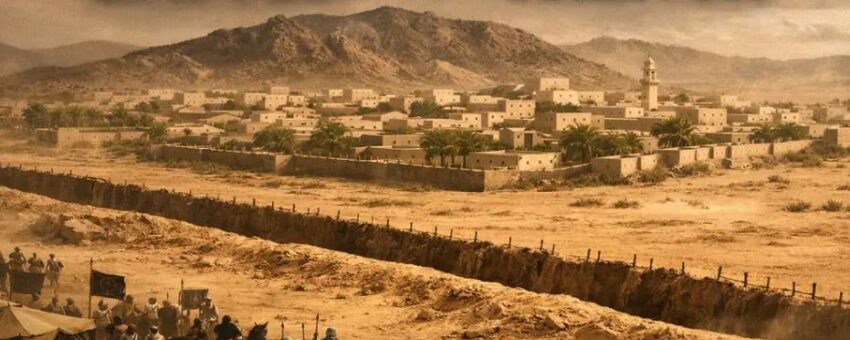
The Battle of the Trench, also known as the Battle of Khandaq, is one of the most significant events in Islamic history. It took place in Madinah during the early years of Islam, when the Muslim community faced a major threat from a large coalition of opposing forces. Today, the historic locations associated with this battle attract pilgrims and visitors who wish to learn about the courage, patience, and faith demonstrated by the Prophet Muhammad (peace be upon him) and his companions. Visiting these sites offers an opportunity to connect with the history of Madinah and reflect on the lessons that continue to inspire Muslims around the world.
The Historical Background of the Battle of Khandaq
The Battle of the Trench occurred in 627 CE, when several groups joined forces to challenge the Muslim community in Madinah. Facing an enemy army much larger than their own, the Muslims needed a strategy to protect the city and its residents. Salman al-Farsi, one of the companions of the Prophet Muhammad (peace be upon him), suggested digging a trench along the vulnerable approaches to Madinah. This defensive method was unfamiliar to many Arabs at the time, but it proved highly effective.
The Muslims worked together to dig the trench despite difficult conditions, limited resources, and the pressure of an approaching enemy. Their collective effort demonstrated the importance of cooperation and determination during times of hardship. When the opposing forces arrived, the trench prevented them from launching a direct attack. The confrontation eventually ended without the invading coalition achieving its objective, making the battle an important moment in the history of the Muslim community.
Visiting the Seven Mosques Area
One of the best-known places associated with the Battle of Khandaq is the area commonly called the Seven Mosques. Located near the site traditionally linked with the defensive trench, this historic area is popular among visitors exploring Islamic landmarks in Madinah.
The name refers to a group of small mosques associated by local tradition with the battle and its surrounding events. The best-known landmarks in this area include Masjid al-Fath, which holds particular historical importance. Visitors often stop here to learn about the defensive efforts made by the Muslims and the circumstances surrounding the battle.
The atmosphere around these sites encourages quiet reflection. Although the area has changed significantly over the centuries, its historical associations help visitors imagine the challenges faced by the early Muslim community. Travelers should remember that the surviving buildings are later structures rather than untouched remains from the original battle.
Masjid al-Fath and Its Significance
Masjid al-Fath is among the most important landmarks connected with the Khandaq area. It is traditionally associated with the Prophet Muhammad (peace be upon him) during the Battle of the Trench. The mosque’s name, meaning the Mosque of Victory, reflects its connection with an important period in Islamic history.
Visitors can take time to appreciate the mosque’s setting, offer prayers when permitted, and reflect on the significance of patience and trust in Allah. The surrounding landscape provides a reminder that Madinah’s historical importance extends beyond its central mosques and includes locations where the early Muslim community faced difficult tests.
Exploring the Historic Landscape
A visit to the Khandaq area is also an opportunity to understand Madinah’s geography. The surrounding hills and open spaces help explain why defensive planning was essential during the battle. Observing the landscape makes the historical account easier to imagine, even though modern development has transformed much of the original terrain.
Visitors should approach the area respectfully, avoid disturbing religious sites, and follow local instructions. Comfortable footwear, drinking water, and suitable clothing can make the visit more pleasant, particularly during warmer months. If traveling with a group, allowing enough time to explore without rushing can make the experience more meaningful.
Lessons from the Battle of the Trench
The Battle of Khandaq teaches enduring lessons about faith, leadership, teamwork, and perseverance. The decision to dig a trench illustrates the value of thoughtful planning, while the companions’ willingness to work together highlights the strength of unity. Their experience also reminds visitors that difficult circumstances can be faced through patience, practical action, and reliance on Allah.
For pilgrims visiting Madinah, exploring the historic sites of Khandaq adds an important dimension to the journey. Beyond seeing historic landmarks, visitors can reflect on the sacrifices made by the early Muslims and consider how these values apply to everyday life. A visit to this area offers a meaningful connection with Islamic history and a deeper appreciation of the resilience that helped shape the Muslim community.







No Comments