



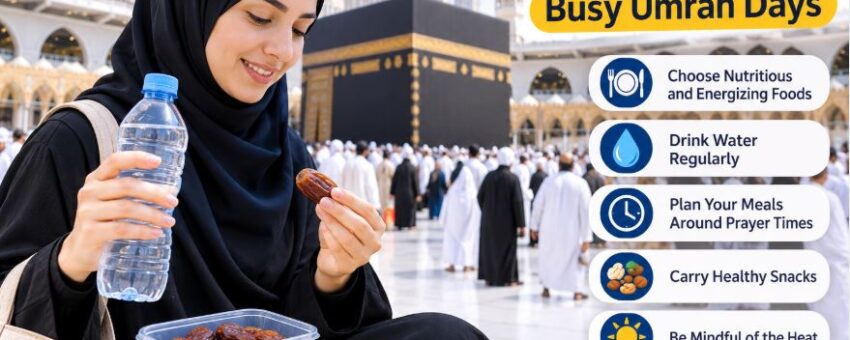
Performing Umrah is a deeply meaningful spiritual journey, but it can also be physically demanding. Pilgrims spend long hours walking, standing, praying, and travelling between different locations in Makkah and Madinah. During busy days, it is easy to become so focused on worship and group activities that meals and hydration receive less attention. However, maintaining good eating and drinking habits is essential for staying comfortable, energetic, and healthy throughout the pilgrimage. With a little preparation, pilgrims can manage their daily nutrition without interrupting their spiritual activities.
Start Your Day With a Nutritious Breakfast
Breakfast is particularly important when planning a full day of worship. Many pilgrims begin their mornings early to perform Fajr prayer, visit the Haram, or prepare for scheduled group activities. Leaving the hotel without eating can lead to tiredness and hunger before lunchtime. A balanced breakfast can provide the energy needed for walking and other physical activities.
5 Star Umrah Package from Dubai
Choose simple foods that are filling but not too heavy. Eggs, bread, oatmeal, yoghurt, bananas, and dates are practical options. These foods provide a combination of carbohydrates, protein, and other nutrients. Avoid eating excessively oily or spicy meals early in the morning, especially if you have a sensitive stomach. A good breakfast helps you begin the day feeling comfortable and prepared.
Drink Water Regularly Throughout the Day
Hydration is one of the most important parts of managing busy Umrah days. The weather in Saudi Arabia can be hot, and walking for extended periods may increase the body’s need for fluids. Waiting until you feel thirsty is not always the best approach, so make drinking water a regular habit.
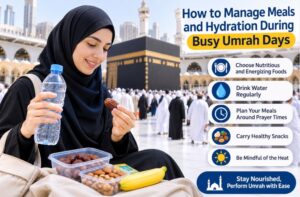
Carry a reusable water bottle whenever possible and refill it when convenient. Zamzam water is also widely available around Masjid al-Haram and other designated areas. Take small drinks regularly, particularly after walking, spending time outdoors, or completing physical activities. Pilgrims should pay attention to signs of dehydration, including headaches, dizziness, dry mouth, and unusual tiredness.
Choose Light and Balanced Lunch Options
A heavy lunch can make you feel uncomfortable during afternoon prayers or sightseeing activities. Instead of eating large portions, choose meals that provide sufficient nutrition without making you feel overly full. Rice with grilled chicken, vegetable dishes, sandwiches, lentil soup, and fresh fruit can be suitable choices.
5 Star Umrah Package by Bus from Dubai
If your group has a scheduled ziyarat tour, plan your lunch around the departure and return times. Eating something beforehand can prevent hunger during long journeys. You can also carry a small snack in case your schedule changes or you cannot return to the hotel at the expected time.
Keep Healthy Snacks Within Reach
Busy schedules sometimes make it difficult to enjoy meals at regular times. Having convenient snacks in your bag can help you maintain your energy between prayers and activities. Dates, bananas, nuts, crackers, and packaged biscuits are easy to carry and generally require little preparation.
Choose snacks that are easy to eat and do not create unnecessary mess. Avoid keeping perishable food in a hot environment for extended periods. Families travelling with children should carry familiar snacks because younger pilgrims may become hungry unexpectedly.
Be Careful With Dinner and Evening Meals
After a long day, dinner provides an opportunity to relax and replenish your energy. However, eating too much immediately before sleeping may cause discomfort. Choose a balanced meal containing protein, vegetables, and carbohydrates.
5 Star Umrah Package by Air from Dubai
Pilgrims who return late from the Haram should avoid skipping dinner completely. Even a simple meal of soup, bread, yoghurt, or rice can help satisfy hunger. Try to maintain consistent eating habits rather than relying entirely on fast food throughout the journey.
Maintain Food Hygiene
Food safety deserves special attention during Umrah because pilgrims regularly visit crowded places and use shared facilities. Wash your hands before eating, choose freshly prepared meals, and avoid food that has been left uncovered for long periods. Drink safe, properly stored water and wash fresh fruits before consumption.
People with dietary restrictions, allergies, diabetes, or other medical needs should plan their meals carefully and follow their healthcare professional’s advice.
Create a Simple Daily Food Routine
A practical eating schedule makes busy days easier to manage. Have breakfast before morning activities, drink water regularly, enjoy a balanced lunch, carry a light snack, and eat a comfortable dinner. Adjust this routine according to prayer times, travel arrangements, and personal needs.






No Comments