




Performing Umrah is a deeply meaningful spiritual experience, and for elderly pilgrims, it can be a particularly cherished opportunity to worship, reflect, and seek closeness to Allah. However, the journey can also be physically demanding because it involves walking, standing, crowds, changes in weather, and a different daily routine. With thoughtful preparation and a focus on comfort and safety, older pilgrims can make their Umrah journey more manageable and spiritually fulfilling.
The first step is to prepare well before leaving home. Elderly pilgrims, especially those with existing health concerns, should have a medical check-up and discuss their travel plans with their doctor. They should make sure that any health conditions are stable and that they have enough prescribed medication for the entire journey, preferably with some extra supply. Medicines should remain properly labeled and easily accessible. It is also helpful to carry a written list of medical conditions, medications, dosages, allergies, and emergency contact information. This can be extremely useful if medical assistance is needed during the trip.
Physical preparation is equally important. Umrah involves considerable walking, so gradually increasing daily walking before the journey can help improve stamina. However, elderly pilgrims should avoid overexertion. The purpose is not to become highly athletic but to become comfortable with moderate walking and standing. During the journey, regular rest should be treated as part of the plan rather than a sign of weakness. There is no benefit in exhausting oneself unnecessarily when worship can be approached with patience and moderation.
Choosing comfortable accommodation can make a major difference. A hotel located reasonably close to the Haram may reduce the amount of walking required each day. When possible, pilgrims should request a room that is easy to access and avoid unnecessary stairs. Planning transportation in advance can also reduce physical strain. Elderly pilgrims should not hesitate to use available mobility assistance, wheelchairs, or other appropriate support when walking becomes difficult. Asking family members or companions for help is also a practical way to prevent falls and exhaustion.
Comfortable footwear is essential. Shoes or sandals should be well-fitted, broken in before the trip, and suitable for extended walking. New footwear should not be worn for the first time during Umrah because it may cause blisters or discomfort. Elderly pilgrims should also pay attention to foot health and avoid walking barefoot in areas where it could increase the risk of injury.
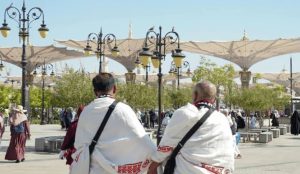
Hydration and protection from heat deserve special attention. Older adults can be more vulnerable to dehydration and heat-related problems. Drinking sufficient water, taking frequent breaks, seeking shade or cooler areas, and avoiding unnecessary walking during the hottest periods can help conserve energy. Light, breathable clothing can also improve comfort. If dizziness, unusual weakness, confusion, severe fatigue, or other concerning symptoms develop, the pilgrim should stop, rest, and seek medical assistance rather than trying to continue.
Crowds can present another challenge. Whenever possible, elderly pilgrims should choose less crowded times for worship and movement. Staying close to a trusted companion is advisable, particularly in busy areas. Families can establish a meeting point in case members become separated. Carrying identification and emergency contact details can provide additional peace of mind. A mobile phone with important numbers saved can also be valuable.
Personal hygiene and infection prevention are important throughout the journey. Regular handwashing, carrying hand sanitizer, and avoiding close contact with people who are visibly unwell can help reduce the risk of illness. A mask may be useful in crowded environments, particularly for pilgrims who are more vulnerable to respiratory infections. Adequate sleep and nutritious meals are equally important because the body needs time to recover between activities.
Finally, elderly pilgrims should remember that Umrah is a spiritual journey, not a test of physical endurance. It is perfectly reasonable to slow down, rest, use assistance, or adjust plans according to one’s abilities. Patience, preparation, and reliance on family or companions can make the experience much more comfortable. By taking care of their health, planning their movements carefully, and avoiding unnecessary strain, elderly pilgrims can focus more fully on prayer, reflection, and the profound spiritual blessings of Umrah.







No Comments